

Rethinking 5 common beliefs that hold you back, and turning them into progress
There are more than 220,000 foreigners living in Lithuania today and make up 7.5 % of the local population. That means nearly one in thirteen people you meet on the streets of Vilnius, Kaunas, Klaipėda, or anywhere else is building their new life around the Lithuanian language. That is a community large enough to shape the cultural and economic fabric of modern Lithuania.
This is, of course, understandable from the government’s perspective. To protect the national identity and gently remind “guests” of the rules, from 1 January 2026 foreign citizens in Lithuania will need to pass a national language exam to receive or prolong their work permit.
But what actually stops foreigners from speaking Lithuanian out loud on the street? Below are five common beliefs that we would like to look at from a different angle.
1.”I am afraid to make a mistake”
Reframe it: Native speakers make mistakes too
One of the most visible public efforts to help foreigners learn Lithuanian happened recently in Vilnius. The Vilnius city municipality initiative placed stickers on fences and lampposts around the city centre. Each one showing a Lithuanian word and its translation.
It is a lovely idea, and it reminds us of the little labels we all stuck around our apartments trying to memorise new vocabulary. But one of those stickers started a lively online discussion.
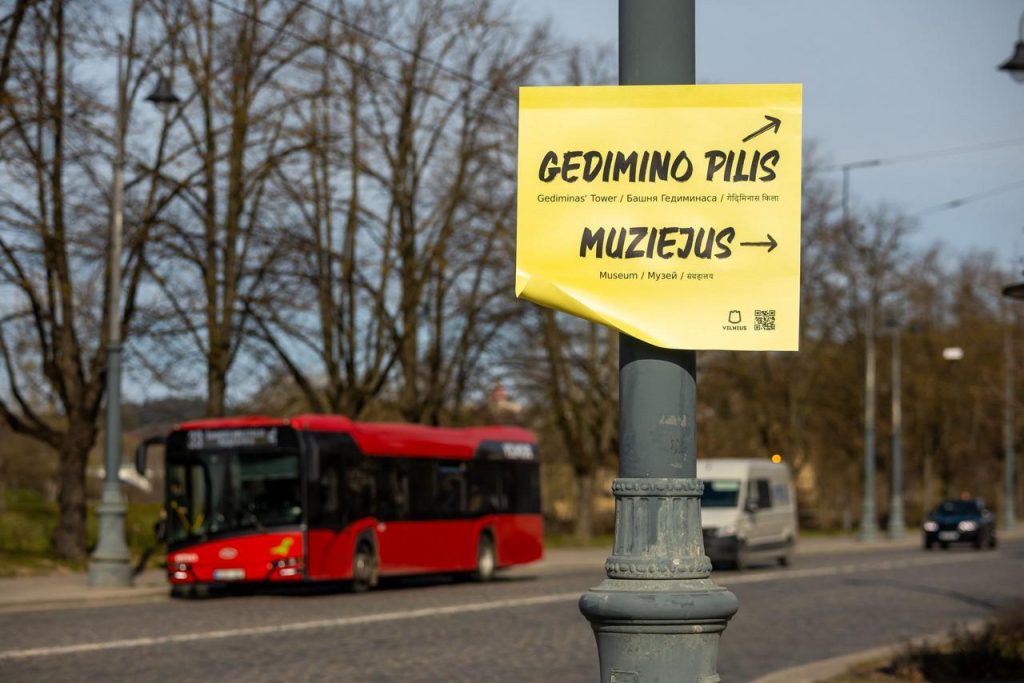
If you look closely, you will notice that Gedimino pilis was translated as Gedimino tower. In Lithuanian, however, pilis means castle, while tower is bokštas.
Yes, technically there is a castle under Gedimino Hill. But for someone learning the language, pilis and bokštas are two completely different words, and mixing them up on a public teaching sticker is exactly the kind of mistake learners are afraid of making.
Conclusion: Do not be afraid to make mistakes in Lithuanian. Even native speakers make them – sometimes at the city-government level.
2.”Lithuanian is the most difficult language in the world”
Reframe it: Lithuanian is no harder than French, German, or Japanese
Lithuanian is undeniably ancient and archaic, with deep roots in the Indo-European language family. When a foreigner says, “I have started learning Lithuanian,” the local usually takes a deep breath and replies, “Sėkmės” (Good luck), hinting that you have just signed up for a very long journey.
But a rich history also means that younger languages borrowed generously from this older one. If you compare Lithuanian and Belarusian words, you will find a surprising amount of overlap:
- Burokėlis — Бурак
- Kišenė — Кішэня
- Razinos — Разынкі
- Padėka — Падзяка
- Stulpas — Слуп
…and many more. You can explore a full set of shared Lithuanian–Belarusian vocabulary on DuoCards here and make sure to remember that “old” doesn’t mean isolated. Lithuanian shares deep connections with neighboring languages.
Conclusion: Every language has its quirks and its difficulties. Build your passive vocabulary with DuoCards, listen to audio, watch videos and letters become more than just a set of signs.
3.”Lithuanians don’t want to speak with foreigners”
Reframe it: Lithuanians are always happy to speak their native language
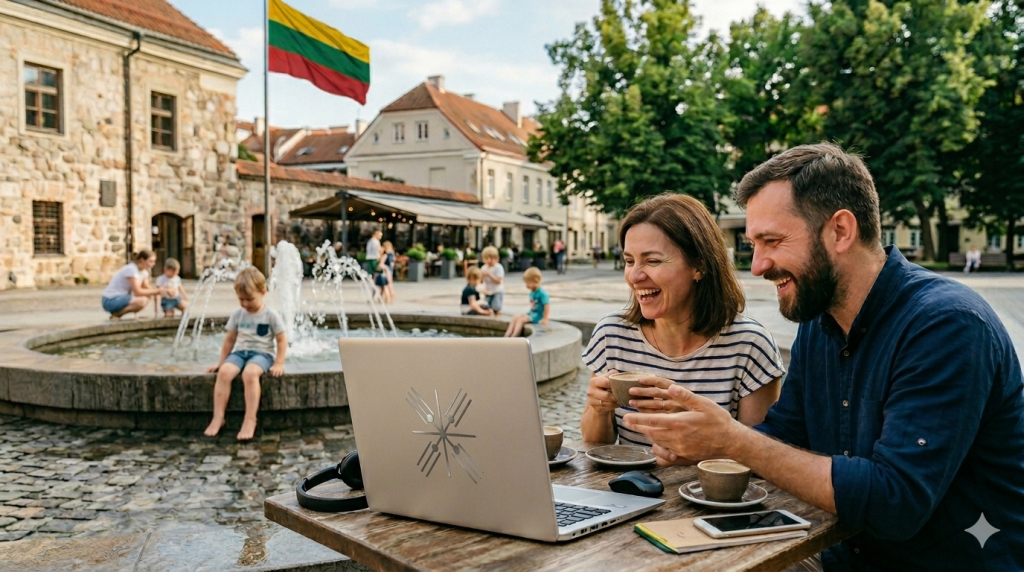
Imagine you are back in your home country, shopping in your local store or walking down the street, and suddenly a stranger addresses you in a language you do not know, or simply do not want to switch into. Worse, they seem annoyed that you do not speak it. Sound familiar?
Lithuanians feel exactly the same way. That is why they can sometimes come across as cold or distant. But the moment you try to speak Lithuanian with them, you face a completely different “danger”: getting stuck in a warm, enthusiastic conversation that lasts for hours.
Conclusion: Here is a recipe for a good mood that lasts all day. Start speaking Lithuanian in public places whenever you can, collect compliments, boost your confidence, and feel yourself growing closer to the local community.
4.”The self-service checkout is my only conversation partner in Lithuanian”
Reframe it: I can practise my “shopping” vocabulary with other people online
As we mentioned, there are more than 220,000 foreigners in Lithuania, and roughly 10,000-12,000 of them work remotely. This can become a real barrier to integration, because people spend most of their time at home and socialise only within their own diaspora.
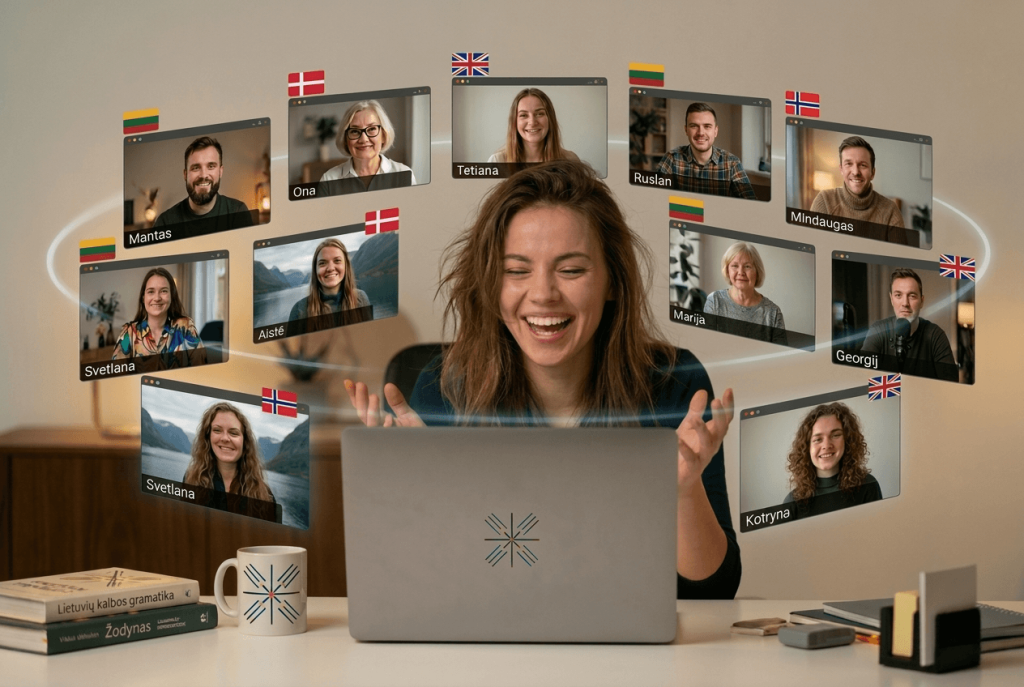
Fortunately, there is a way out. Lithuania now offers many learning initiatives, and one of them is LABASklabas – live conversations with native speakers on current, real-life topics.
5.”I understand everything but can’t say anything”
Reframe it: Understanding and speaking are two different skills, and both need practice.
Understanding Lithuanian and speaking Lithuanian rely on different processes in the brain. When you recognise a word, your brain simply matches it to something familiar. This is a fast and relatively passive process that doesn’t require much effort.

Speaking is different. When you want to say something, your brain has to do several things at once: choose the right words, build a sentence, apply grammar, and pronounce everything correctly — all in real time. And often under pressure, in front of another person.
That’s why you can understand a full sentence instantly but struggle to say something much simpler. It’s not because you don’t know enough. It’s because you haven’t yet trained the speaking side of the language.
Conclusion: At first, it seems logical: if you know the words, you should be able to use them. But language doesn’t work that way. It’s not just knowledge – it’s a skill, and like any skill, it can be trained.
Final Thoughts
Most of what holds you back is not the language itself, but the way you see it: fear of mistakes, the belief that it is “too difficult,” or the habit of staying in safe situations. But these are not real barriers — they are part of the learning process.
Step by step, word by word, conversation by conversation, speaking becomes easier, more natural, and more yours.
Modern tools can support you, but the next step is still yours.